What do people really want?

Question-mark-backgrounds-wallpapers

What do people really want?

It’s a leading question definitely, but I will keep it to the aesthetic market place, and the wonderful world of anti-ageing.

Over time our understandings, our technologies, our products and our skills have changed, but the one desire to look younger, to feel better, to portray the image of who we feel on the inside on the outside hasn’t changed in centuries.

The ancients searched for the fountain of youth, ancient Greek, Roman, Aztec, Egyptians all looked for topical solutions to apply to help keep the younger… And in today’s world we aren’t very different.

The anti-Ageing market is a whopping  $60 billion dollar market where $25 billion is spent on procedures, $ 5 billion on spa treatments, $30 billion on over the counter (OTC) beauty products worldwide. There is an estimated 77,000 cosmetic injectors in the world (Plastic Surgeons, Dermatologists, Nurses, Cosmetic/Appearance medicine Physicians) and growing day by day.

Who is driving the market?

Essentially it is the baby boomer market, or rather the beauty boomer market. This group of People has the financial abilities, the knowledge sources and a definite willpower to overcome ageing…. Continuing to look young.

Google analytics states that this market is defined as the 46-65 year olds.

  • 76% are comfortable with their age
  • 52%feel younger than their actual age
  • 99% of boomer decisions are made using Google. 
  • TV is the trigger to research – so they see something on the TV and then they will research it on-line 
  • Boomers rely on search engines and manufacturers websites to provide them with the information they need about the various products/procedures. 
  • Videos are a huge aspect of meeting the knowledge quest for information and product/treatment reviews and stories relating to procedure. 
  • 85% of today’s patients are female, who are generally big brand lovers and are considered to be heavy social media users. 

But what do they really want?

Over the past 5 years several surveys have been undertaken to try and establish what patients really want when they are seeking out options. There are slight variations when it comes to different cultural requirements, but essentially the results have only strengthened the opinions and views posed 5 years ago. More recently I conducted a further survey with over 1000 respondents and the results are inline with the findings as well. 

  • People want to portray on the outside what they feel on the inside 
  • People want to look better
  • People want to look natural
  • People don’t want to look over done

The primary goal people have when looking at a cosmetic procedure is:

  • To feel better about their appearance   30.8%
  • To look better    23.1%
  • To look younger     15.4%
  • To look more refreshed    23.1%
  • To look less tired    7.7%

Top non-surgical procedures in 2011 as reported by the International Society of Aesthetic Plastic Surgeons

  1. Toxins
  2. Dermal injectables
  3. Chemical Peel
  4. Laser Hair removal
  5. Microdermabraision

Top surgical procedures in 2011 as reported by the International Society of Aesthetic Plastic Surgeons

  1. Breast augmentation
  2. Rhinoplasty
  3. Liposuction
  4. Blepharoplasty
  5. Facelift

People have highlighted the following as their most important concerns when considering a medical aesthetic procedure are?

  1. Looking natural   64.3%
  2. Potential complications   42.9% 
  3. Not looking natural    28.6%
  4. Cost   28.6%
  5. After care service   7.1% 

What makes good customer service for patients?

  • Over 80% of respondents want consistent practice and good results
  • Over 75% want professional and courteous staff
  • Versus 13% of people base their decisions on price


When a patient sits down in front of a clinician – providing a solution to these real needs can be a very complex and interesting dilemma that all clinicians face across the world, and one that gets more and more complex the more variables clinicians are faced with including but not limited to;

·       Trying to address what a patient thinks they need, versus what they actually want and can afford;

  • The technologies and their claims versus their abilities and real time clinical evidence;
  • The understandings the Ageing process, the racial and cultural differences;
  • The raft of trends published in the media and
  • Financial affordability of the procedure.

It is truly a complex minefield of possibilities.

As we march forward in what is an eternal and growing quest for youth (in its various forms) we must always remember that we didn’t age overnight, we didn’t become who we are today simply waking up one morning and looking in the mirror and scream – oh my god I’m old. There are a range of aspects and causes to our appearance that need to be understood and then addressed separately and as part of a holistic approach if we are to truly meet what today’s patient is demanding, and what the research has overwhelmingly underlined over the past 5 years at least.

Clinicians should approach the patient with reverence, with grace and poise, and with respect. Treat the cause of the wrinkles, the volume loss, the lines, rather than just the symptoms. Work with your patients so they can start to feel younger, feel more rejuvenated and ultimately address what the survey’s inform us of what they are looking for, not we want to give them.

Don’t just make people look pretty, help people to feel better about their appearance, help people to feel more confidence in themselves and then we help people achieve what they really want.  


Scott McLennan
 

Screen_shot_2012-06-16_at_3

Tales of a misspent youth

Tribal-tattoos-for-men

Lets face it tattooing is very popular. Some think it is sexy, for some it is a cultural right of passage, and for others they couldn’t think of anything worse. 

I remember working in the 90’s with an elderly opinionated general physician who always muttered under his breath when we reviewed patients with tattoos “tales of a misspent youth”. 

The popularity and the adoption of tattooing among the generation-X during the 1990s were indeed huge, and now leaves a very large proportion of that generation decorated with ink. Yesterday’s rebels are now today’s professionals. Leaving behind some very interesting statistics:

  • In 1936 – 2% of Americans had tattoos. (Life magazine)
  • The National Geographic News stated in April 2000 that 15% of Americans were tattooed (or approximately 40 million people!)
  • Esquire Magazine estimated in March 2002 that 1 in 8 Americans was tattooed.
  • In 2003 16% of Americans had one or more tattoos, (Harris Polls)
  • In 2006 36% of 18-25 year olds had tattoos (pew Research Centre)
  • In 2006 40% of 26 to 40 year olds had tattoos (Pew Research Centre)
  • A 2006 study done by the Journal of the American Academy of Dermatology found that 24% of Americans between 18 and 50 are tattooed; that’s almost one in four. And the survey showed that about 36% of Americans age 18 to 29 have at least one tattoo!
  • According to the American Society of Dermatological Surgery, they stated in 2005, that of all the people they treat with laser and light therapy, only 6% are getting a tattoo removed.
  • In 2008 14% of Americans had one or more tattoos. (Harris Polls)
  • Over 50% of kids and adults say they have tried temporary tattoos. 

No longer seen as taboo, the popularity of tattoos and temporary tattoos highlights that skin ink is here to stay and even increase in prevalence – here is some data that may surprise you about tattoo internet searches: 

  • Back tattoos rank the highest in searches (lower, upper and all over). But, not far behind: necks, arms, wrists and ankles. Unmentionables also rank fairly high. 
  • Angelina Joley’s tattoos rank the highest in the celebrity category closely followed by: Nicole Richie, Alyssa Milano and heavy metal rockers Metallica. 

Some interesting things that people have to say about tattoos today include: 

  • Three in Ten Americans with a Tattoo say having one makes them feel sexier.
  • Just under half of adults without a Tattoo say they would like to get one in the future.
  • Most people with a tattoo say they plan to get more tattoos or purchase more temporary tattoos.  

In the past five years, much has been discussed about the stigmas of those with tattoos. But, that does not seem to have much of an impact of the number of people who have them as just 2 percent fewer Americans say they have tattoos. Also, the number of people who regret their tattoo has also not really changed in the past five years. There is a trend now though that shows that the number of younger people (under 18) continue to shun tattoos. If that continues as younger teens hit 18, there may be a change in those having tattoos in the long run. 

So with all the popularity of getting a tattoo, what is the popularity of getting them removed?

Well simply with only 6% of people being treated with laser and light therapies seeking tattoo removal, we probably need more research into how this translates into the true number of people being treated. But essentially the anecdotal discussions amongst clinicians is that the number of tattoo removal procedures performed each year is projected to grow. 

Star_face

So sometimes people get tattoos they may regret, or they are in the wrong spot, or they are not as meaningful now as what they once were. Removing tattoos though is not easy – and certainly not as easy as getting one. With different colours, different pigments and different depths at which the ink is placed each complexing the task more and more. Tattoo removal lasers are also very different and the practitioners trying to remove them are extremely different . Depending on who they are, how qualified they are, and how experienced they are they are able to make adjustments to target different aspects of each tattoo. Black and Blue pigments are often the easier to remove; however greens, organs and yellows can be very difficult to remove and often leave scars. Tattoo removal lasers are programmed to use precisely the right laser wavelengths to destroy the difficult to remove colored ink from within the epidermis without damaging the surrounding tissue.

Each procedure takes about 30 minutes to complete, and physicians normally charge between $150 and $300 per treatment. Treatment packages range from 6-12 procedures on average, spaced out 4-6 weeks, is usually required to effectively eliminate all traces of the tattoo from the patient’s skin. This means that each tattoo removed generally costs around $2000.

It is rare for a beauty parlors and laser clinics to have the right laser and skill to remove tattoos however doing an appropriate amount of research into the clinician and the technology they have will assist in ensuring the best result for each tattoo, with hopefully little scarring or damage.

However, the best way to remove a tattoo is to probably not get it in the first place. Prevention is always better than cure, or just make sure that the tattoo that you invest in today, you will still want tomorrow. 

Nevertheless I still do think there are some amazing tattoos, and then there are some lets just say “interesting” tattoos – that you just know will cause the person wearing them some regret in the future.


S


The world of travelling……

Img_0033Img_0025Img_0100Img_0022

So here I am sitting in yet another airport, about to board yet another plane bound for yet another destination. 


I travel between 240-300 days per year (and have done so for the past 7 years) to many places around the world (Australia/New Zealand, Asia, Europe and the US). Traveling can be an interesting experience on human endeavors – what makes a good traveller v’s tourist; how people cope with stress and the fundamentals of travelling successfully really all do really depend on the person. The people you meet are indeed interesting, the experiences you lived do help to round out your personality, and if you look and allow yourself to think – the appreciation for what you have will also improve.


Traveling as much as I do certainly has lost some of the intrigue and glamour I once had given it, but I still do really enjoy it. I still love take off, and I love a bit of turbulence. When I started travelling the anticipation and the excitement of researching, booking and receiving the confirmations were indeed a very strong part of the wonder of something new. But alas now, with many aspects of the journey becoming stale, problematic or even loathsome there are ways that you try to just get through it.


I find that above all else, patience is what will allow you to keep your sanity. The little idiosyncratic behaviors of others that would test the patience of saints are just their little thing that they need to do to get them through their day and journey; and they can be extremely entertaining and amusing. Sometimes they will be down right annoying, rude and may interfere with yours, but essentially they are quite amusing. I will admit that I have my own – and they are indeed odd, but I do own them.


Traveling as much as I do has allowed me to experience the wonders of being in the top tier frequent flyer programs and enjoy their benefits, which do assist with making the journey a little more pleasant, however it still isn’t glam. It was pointed out to me several years ago that the programs were designed not necessarily to reward frequent flyers, but more to applogise and acknowledge the fact that you bear witness to some things that are not in their advertisements, or they want you to see. Their are better programmes than others, and their certainly are much better airlines than others.  


I will admit that I do get to travel predominately at the pointy end of the plane, I am grateful, but travelling as much as I do having some solitude and ease helps greatly. But it really doesn’t matter, people are still people and people on planes are just weird: Here are some observations: 

  •  Rows start at number 1 (unless your on Cathay they start at 11 and don’t have 13), if you are seated at row 29 or 46 or even 79 you do not need to look at the very first couple of rows … 
  •  Learn to play Tetris – this will help with overhead locker bins and the storage of items – and if you can’t lift it, then you probably should have checked it
  • Using the seat in front of you to haul yourself up is not a pleasant experience for the person sitting in the seat that you have used for leverage – often the person in front move or even fly backward/forward – amusing but not good etiquette
  • If the flight attendant offers you the seatbelt extension, then you may need it – they aren’t being offensive, they are just concerned that you may cut off circulation to your legs if you try and squeeze seatbelt around your girth.
  • The seatbelt sign when on – generally means sit down and buckle up… Not to get up a
    nd wander around – if you fall because of the turbulence you have been warned of then it’s your own stupid fault
  • Screaming children – where do I start. Noise canceling earphones are a godsend – invest (the ones the airlines give you aren’t quite good enough for some sets of lungs). If you own a screaming child – attend to it, try and placate it, and think about your fellow passengers – they and the flight crew are not your personal nanny service.
  • If you are carrying a handbag or a backpack – you are often bashing the people in the aisles as you saunter down. Note: when you turn around your backpack/handbag is usually bigger than you – so it will swing and hit people in the face. Take it off your back and carry it in front of you.
  • Sitting in the aisle – a preference for myself when travelling on short flights – but try not to stick your legs out until all the passengers are on board, and get up when the person sitting next to the window wants to get into their seat. Also the crew will probably keep running over your toes as they push their carts up and down.
  • Yelling at ground crew or even the flight crew will not encourage a resolution; you just look like an idiot. When things are going wrong, take a breath and approach the situation with a resolution in mind. The person in front of you is only working on the information that they have been given; they are not deliberately trying to sabotage your journey.

I am sure there are many more tips I can share about travelling, and look forward to doing this as I continue my journeys around the world.

Remember to survive the journey – relax, be patient and watch the people around you for amusement. Things go wrong from time to time; you have very little control if any, so enjoy the situation as it arises.


S


Rejuvenating my girth!

Well welcome to 2012… And with the advent and prolific action of resolutions and the such, I thought I might start this year with a commentary on weight(loss) – the number 1 resolution for 2012.

Over the past couple of weeks I have had the absolute pleasure and delight with catching up with friends, relatives and colleagues, as the festive season demands. However with this there is also that dreaded fear of knowing what some will say to your face, and then what others will smirk about behind your back…. The joys of the festive season indeed.

Recently I was in a lift and ran into someone I hadn’t seen for some time, the very first thing she said to me wasn’t hello/how are you/etc, but “my you have put on a little bit of weight haven’t you”. Charming!

Now I will admit that the strange and wonderful life I lead has taken its toll on my girth, but I am not morbidly obese and I am not fat, I am still a size 34 waist and a medium size shirt, and generally look heathy, but this lovely social greeting got me thinking about weight, perceptions, weight loss and societal pressures. Not to mention social etiquette.

Family members are also another delight as they often feel it is their right to comment on everything – and in particular in this little duck’s case – all things that jiggle.

Society is an unusual thing at the best of times, and trying to wade your way thought the temperate waters of social etiquette and the differences between cultures and communities is a very interesting path. What is considered polite and social in some circles is considered rude and uppity in others.

The perception of weight, what is “normal”, what is unhealthy, and what is acceptable, really does depend on where you are standing at the time. In some circles you a considered wealthy and more desirable the bigger you are (Pacific Island cultures). Where others, the thinner you are the more sellable you are(international fashion houses and modeling).

The use of the BMI (Body Mass Index) within the medical and fitness fields can be seen as a useful tool to put a “number” on measuring healthy weight, however it is a floored system as it doesn’t take into account muscle definition, and would class body builders as obese.

Within the Aesthetic Dermatology space, we are constantly facing the conundrum of getting rid of fat in one area(or more) whilst also adding volume to others – it is a seemingly never ending circle. There are devices and procedures that promise to remove fat, roll it away, freeze it, and fry it (All with varying degrees of success); and there products and procedures we use constantly to add plump up the volume where it is needed (operator dependent)

So this year I will commit to myself to do something about my general fitness and health – rejuvenating my girth! I am not making a resolution to loose weight, because I feel that this could have me going down a slippery path. I will however commit to:
Eating a balanced diet that is nutritious and as “organic” as possible
Drinking more water per day (and not just as a mixer)
And exercising (note to self, make appointment with a PT)

Now for me to do these things I will admit that it is going to be hard, and I am going to have to make a concerted effort, but hey all things in life that are worth anything do take a little bit of effort. Traveling as much as I do, I will need to be vigilant (not obsessive) about this, but I will try.

Are there any quick fixes? Yes there are many! Sure I could go on a detox, a diet, surgery, non-invasive procedure – but hey if it is too good to be true, then it probably is… So I will be taking the tried and proven track and getting healthier.

So, 2012 – the year of rejuvenating my girth

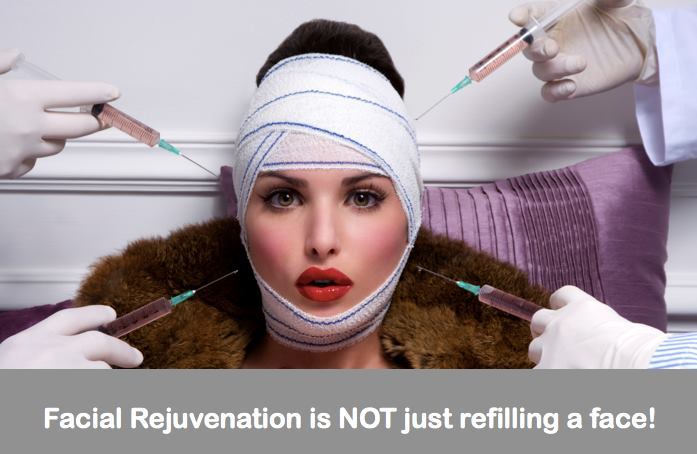
Facial Rejuvenation is not just Refilling a face!

I have been running around Asia and the world a lot over the past 5 years working with physicians or all persuasions in Aesthetic Dermatology, and have been noticing a trend that I do get quite concerned with – some clinicians get the whole artistry of aesthetics, but many don’t.

305496_10150386920822322_596412321_8477340_1338094170_n

Recently I presented my perspective on facial rejuvenation – and here is the abstract… Thought I might share it.

Facial Rejuvenation is not simply refilling a face, it is re-establishing the appropriate relationships between all the underlying tissues (bone, muscles, fat pads and skin). Thus re-creating volume, redefining contour, continuing shape and improving integrity. The provision of facial rejuvenation requires a combination of science and artistry.

When undertaking facial rejuvenation several important points need to be understood when approaching the ageing face.

First, Volume, Contour, Shape & Integrity require a scientific understanding of racial and gender proto-typicality as well as the genetic and environmental aspects to the ageing face. Not to mention the “fashion” trends of the population.

Second is the understanding of specific characteristics of products & procedures available to clinicians’ today. For example; the technical differences between injectable products are simple and straightforward, however understanding these and using their benefits of each remain critical, to ensure safety and success when achieving the desired outcomes of the patient.

Thirdly, over the past 12 or more years clinicians around the world have continued to contribute understandings of facial ageing with the various insights of how different products can be utilized successfully to manage facial ageing. Taking this knowledge and reflecting clinicians can now predict and scientifically manage volume, regulate contour, manipulate shape and improve the integrity of the relationship between our underlying tissues, and therefore the visual display of their work.

Finally, everything undertaken is always relative to the patient. Appropriately selecting, educating and managing patients remains at the core of success for any practice, and when using treatment options, it is imperative to have appropriate procedures in place to help manage patients expectations. A patient’s final outcome, and the amount of product and work it will take to get there, is a reflection of the quality of tissues with which they start. This is, of course, an issue of patient selection and not product selection.

Everyone has the best machine, the best injectable, and the best product/service – just ask them. Hope that helps clinicians perhaps take a moment to ponder their services, and then perhaps consider a range of treatment options for each possible, and not just stick to the same old thing for everything. You can’t do everything with just 1 product!

Hello world!

Welcome to WordPress.com. After you read this, you should delete and write your own post, with a new title above. Or hit Add New on the left (of the admin dashboard) to start a fresh post.

Here are some suggestions for your first post.

  1. You can find new ideas for what to blog about by reading the Daily Post.
  2. Add PressThis to your browser. It creates a new blog post for you about any interesting  page you read on the web.
  3. Make some changes to this page, and then hit preview on the right. You can always preview any post or edit it before you share it to the world.