I have been running around Asia and the world a lot over the past 5 years working with physicians or all persuasions in Aesthetic Dermatology, and have been noticing a trend that I do get quite concerned with – some clinicians get the whole artistry of aesthetics, but many don’t.
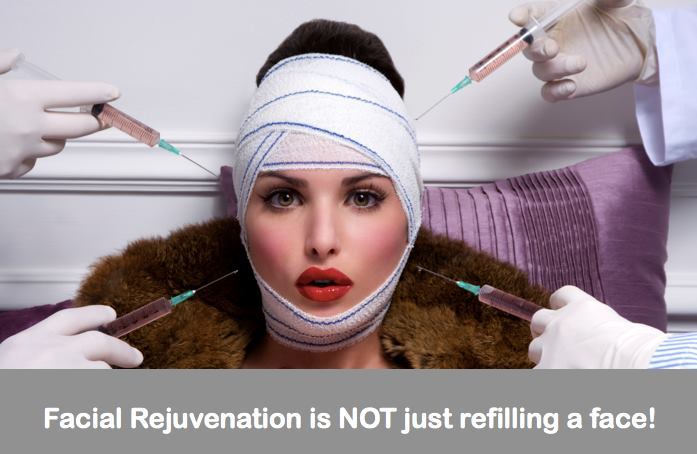
Recently I presented my perspective on facial rejuvenation – and here is the abstract… Thought I might share it.
Facial Rejuvenation is not simply refilling a face, it is re-establishing the appropriate relationships between all the underlying tissues (bone, muscles, fat pads and skin). Thus re-creating volume, redefining contour, continuing shape and improving integrity. The provision of facial rejuvenation requires a combination of science and artistry.
When undertaking facial rejuvenation several important points need to be understood when approaching the ageing face.
First, Volume, Contour, Shape & Integrity require a scientific understanding of racial and gender proto-typicality as well as the genetic and environmental aspects to the ageing face. Not to mention the “fashion” trends of the population.
Second is the understanding of specific characteristics of products & procedures available to clinicians’ today. For example; the technical differences between injectable products are simple and straightforward, however understanding these and using their benefits of each remain critical, to ensure safety and success when achieving the desired outcomes of the patient.
Thirdly, over the past 12 or more years clinicians around the world have continued to contribute understandings of facial ageing with the various insights of how different products can be utilized successfully to manage facial ageing. Taking this knowledge and reflecting clinicians can now predict and scientifically manage volume, regulate contour, manipulate shape and improve the integrity of the relationship between our underlying tissues, and therefore the visual display of their work.
Finally, everything undertaken is always relative to the patient. Appropriately selecting, educating and managing patients remains at the core of success for any practice, and when using treatment options, it is imperative to have appropriate procedures in place to help manage patients expectations. A patient’s final outcome, and the amount of product and work it will take to get there, is a reflection of the quality of tissues with which they start. This is, of course, an issue of patient selection and not product selection.
Everyone has the best machine, the best injectable, and the best product/service – just ask them. Hope that helps clinicians perhaps take a moment to ponder their services, and then perhaps consider a range of treatment options for each possible, and not just stick to the same old thing for everything. You can’t do everything with just 1 product!
 Scott McLennan